Digital Eye Strain: How Screen Time Is Damaging Your Eyes (And What to Do)
Prolonged screen exposure is now one of the leading causes of visual discomfort and reduced eye performance across all age groups. As digital devices become essential for work, education, and daily communication, the strain placed on the eyes has increased significantly, often without immediate awareness of its long-term effects.
Digital eye strain, also known as computer vision syndrome, refers to a group of eye and vision-related problems that result from extended use of digital devices such as smartphones, computers, and tablets. Unlike reading printed materials, viewing digital screens requires more effort due to glare, brightness, contrast, and continuous focusing adjustments. This constant demand can overwhelm the visual system and lead to noticeable discomfort over time.
One of the major contributing factors to digital eye strain is reduced blinking. When individuals focus on screens, their blink rate decreases significantly, leading to dryness, irritation, and a gritty sensation in the eyes. In addition, prolonged exposure to blue light emitted from digital devices can contribute to eye fatigue and interfere with sleep patterns, particularly when screens are used late into the night. The eyes are also required to constantly adjust focus on pixel-based images, which can result in blurred vision and difficulty shifting focus to distant objects. Poor viewing habits, such as improper screen positioning, glare, and poor posture, can further worsen these effects and may also contribute to neck and shoulder discomfort.
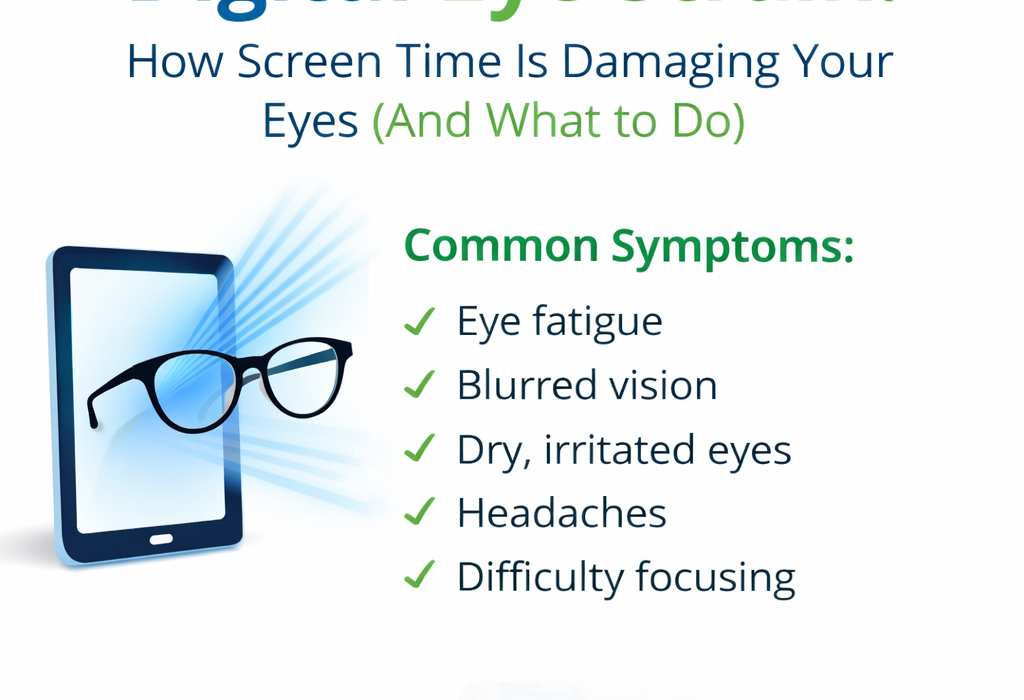
Common symptoms of digital eye strain include eye fatigue, dryness, watery eyes, blurred or double vision, headaches, difficulty focusing, and increased sensitivity to light. These symptoms are frequently reported among office workers, students, remote workers, and individuals who spend several hours each day using digital devices.
Fortunately, digital eye strain can be effectively managed with simple and practical adjustments. One of the most widely recommended strategies is the 20-20-20 rule, which involves looking away from your screen every 20 minutes at an object about 20 feet away for at least 20 seconds. This helps relax the eye muscles and reduces continuous strain. Making a conscious effort to blink regularly also plays an important role in keeping the eyes properly lubricated.
Proper screen setup is equally important in minimizing strain. Screens should be positioned at eye level and at a comfortable distance, typically between 20 to 28 inches from the eyes. Reducing glare through appropriate lighting and screen filters can significantly improve visual comfort. For individuals with prolonged screen exposure, blue-light filtering lenses may provide additional support. Staying well hydrated and using artificial tears can help manage dryness, while taking regular breaks from screens prevents excessive visual stress.
Regular eye examinations remain essential for maintaining good eye health. Routine check-ups allow for early detection of underlying conditions and ensure that the eyes are functioning optimally, even in the absence of obvious symptoms. If discomfort or visual problems persist despite these measures, it is important to seek professional evaluation and care.
In conclusion, digital eye strain is an increasingly common condition associated with modern lifestyles, but it is largely preventable. By adopting healthy screen habits and prioritizing routine eye care, individuals can protect their vision and maintain long-term visual comfort.
Take a proactive step toward healthier vision by scheduling a comprehensive eye examination at Cypress Eye Centre. 👁️ Your Vision, Our Focus. https://cypresseyecentre.com/