
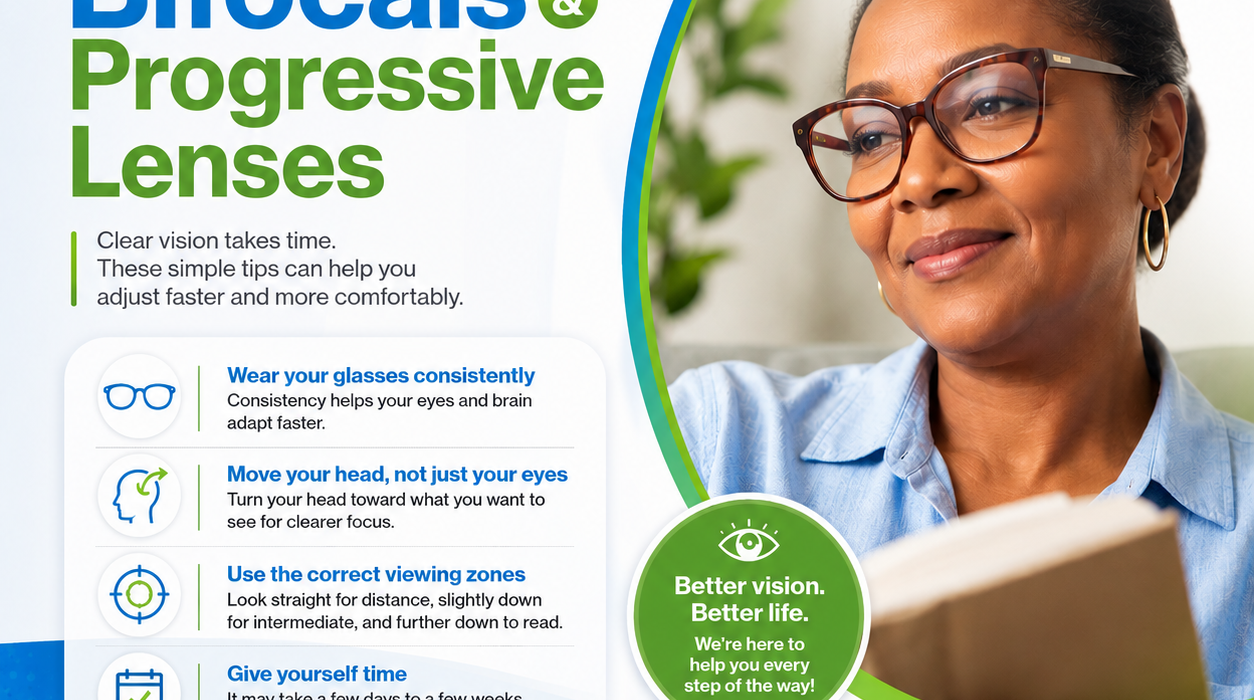
Tips on Adjusting to Bifocals and Progressive Lenses
Switching to bifocals or progressive lenses can feel a little unusual at first, especially if it’s your first time wearing multifocal glasses. Many people notice slight blurriness, dizziness, or difficulty judging distances during the first few days. The good news is that this adjustment period is completely normal, and with the right habits, most people adapt successfully within a short time.
At Cypress Eye Centre Abuja, we often help patients in Abuja transition comfortably to their new lenses through proper fitting, guidance, and follow-up care.
Understanding Bifocals and Progressive Lenses
Bifocal lenses have two different prescription areas:
- The upper part helps you see distant objects clearly
- The lower segment helps with near tasks like reading
They are commonly recommended for people experiencing presbyopia, an age-related condition that affects near vision.
What Are Progressive Lenses?
Progressive lenses work similarly but without the visible line found in https://cypresseyecentre.com/bifocals. They provide:
- Distance vision at the top
- Intermediate vision in the middle
- Near vision at the bottom
Progressive lenses offer a more natural visual transition and are popular among people seeking modern, seamless vision correction.
Why Adjustment Takes Time
Your brain and eyes need time to learn how to use different parts of the lenses correctly. Unlike single-vision glasses, progressive and bifocal lenses require slight head and eye movement adjustments to focus properly.
Common symptoms during the adjustment period include:
- Mild dizziness
- Eye strain
- Distorted side vision
- Difficulty using stairs
- Feeling off-balance
- Headaches
These symptoms usually improve within a few days to two weeks.
Tips to Help You Adjust Faster
- Wear Your Glasses Consistently
One of the biggest mistakes people make is switching back to old glasses. Consistent wear helps your eyes and brain adapt faster.
Try wearing your new lenses throughout the day instead of only during reading or screen use.
- Move Your Head, Not Just Your Eyes
With progressive lenses especially, different viewing zones are positioned throughout the lens.
Instead of looking sideways with your eyes:
- Turn your head toward what you want to see
- Point your nose toward objects for clearer focus
This helps you locate the correct part of the lens more naturally.
- Practice Looking Through the Correct Zones
- Look straight ahead for distance
- Lower your eyes slightly for computer work
- Look further downward for reading
Spending time consciously practicing this can significantly speed up adaptation.
Everyday Challenges in Abuja
Life in Abuja often involves:
- Long hours on digital screens
- Driving through busy roads
- Exposure to bright sunlight and dust
- Frequent phone use
These activities can make the adjustment period more noticeable.
Driving Tips
When driving:
- Move your head when checking mirrors
- Avoid sudden eye-only movements
- Give yourself extra time to judge distances initially
Many patients feel fully comfortable driving within a few days of regular wear.
Screen Use Tips
If you work on computers frequently:
- Position your monitor slightly below eye level
- Take regular screen breaks
- Ensure proper lighting in your workspace
An experienced optometrist can also recommend lens designs specifically optimized for office work.
How Long Does Adjustment Usually Take?
Adjustment varies from person to person:
- Some adapt within 2–3 days
- Others may need 2–3 weeks
Factors that influence adaptation include:
- Your previous glasses prescription
- Lens type
- Frame fitting
- How often you wear the glasses
If discomfort continues beyond two weeks, your prescription or frame alignment may need review.
Common Mistakes to Avoid
- Avoid Looking Through the Wrong Part of the Lens
- Looking through the lower reading section while walking can make the floor appear distorted.
- Avoid Tilting Your Chin Too Much
- Excessive chin movement can create neck strain. Proper frame fitting helps reduce this problem.
- Avoid Cheap or Poorly Fitted Frames
- Proper measurements are essential for progressive lenses to function correctly. Poor lens positioning can make adaptation difficult.
- This is why a professional eye test in Abuja is important before getting multifocal glasses.
When to See an Eye Doctor
You should return for a review if you experience:
- Persistent headaches
- Severe dizziness
- Ongoing blurry vision
- Difficulty walking
- Double vision
- Trouble reading even after adjustment time
At Cypress Eye Centre Abuja, our team ensures that patients receive accurate prescriptions, proper lens fitting, and personalized support during the adaptation process.
Prevention and Eye Care Tips
To maintain comfortable vision with bifocals or progressives:
- Have regular eye examinations
- Keep your lenses clean
- Use anti-reflective coatings if needed
- Protect your eyes from UV exposure
- Update your prescription when necessary
Routine visits to an experienced optometrist can help detect vision changes early.
Final Thoughts
Adjusting to bifocals or progressive lenses may take a little patience, but the long-term benefits are worth it. Clearer vision for reading, screen use, driving, and daily activities can greatly improve comfort and quality of life.
If you are struggling with blurry vision, difficulty reading, or age-related vision changes, book a professional eye test in Abuja at Cypress Eye Centre Abuja. Our experienced eye care team is ready to help you find the most comfortable vision solution for your lifestyle.