Poor Night Vision: Causes, Symptoms, Treatment, and When to See an Eye Doctor
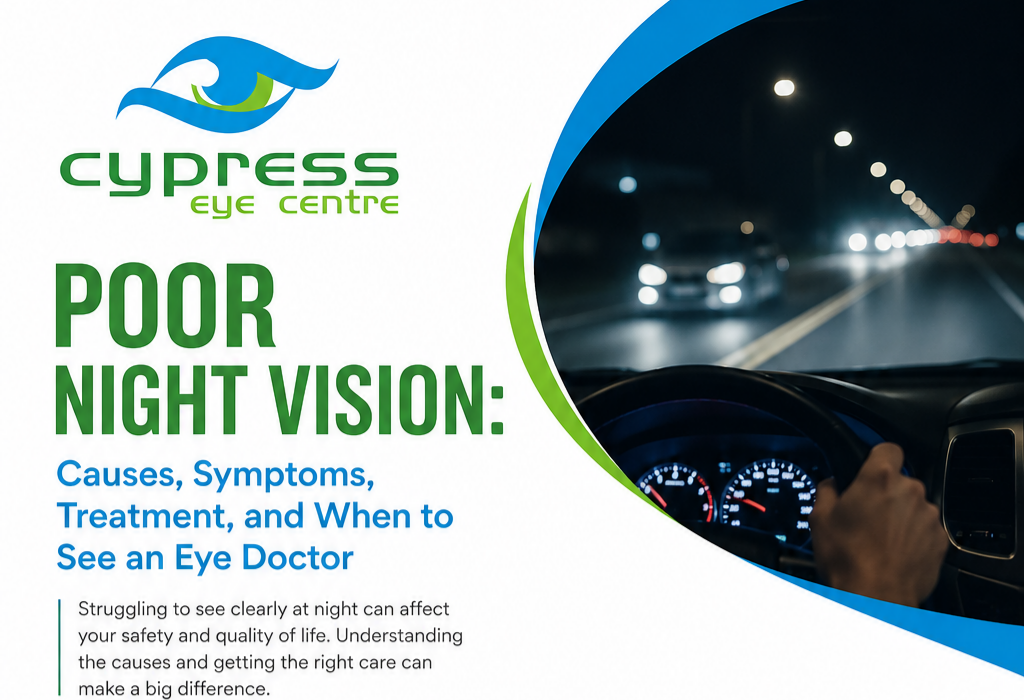
Have you noticed that driving at night has become more difficult?
Do oncoming headlights appear excessively bright, or do you find yourself struggling to recognize people or objects in dimly lit environments?
If so, you may be experiencing poor night vision, also known as night blindness or nyctalopia. While many people assume this is a normal part of getting older, poor night vision is often a sign of an underlying eye condition that requires professional evaluation.
Night vision plays a vital role in everyday life, especially in a busy city like Abuja, where many people drive home after work, travel on roads with varying levels of street lighting, or spend long hours using digital devices. Difficulty seeing clearly at night can affect your safety, confidence, and overall quality of life. Fortunately, most causes of poor night vision can be diagnosed during a comprehensive eye examination, and many are treatable when detected early.
What Is Poor Night Vision?
Poor night vision is the inability to see clearly in low-light or dark environments. People with this condition often find it difficult to adapt when moving from a brightly lit area into a darker one. They may struggle to drive at night, navigate poorly lit streets, or recognize faces in dimly illuminated places. Some individuals also experience increased sensitivity to glare from headlights, halos around lights, or blurred vision after sunset.
Although everyone sees less clearly in the dark than in daylight, persistent difficulty seeing at night is not considered normal. It is usually a symptom of another eye or health condition rather than a disease on its own.
Common Causes of Poor Night Vision
One of the most common causes of poor night vision is an uncorrected refractive error such as short-sightedness (myopia), astigmatism, or an outdated glasses prescription. Even a small change in your prescription can significantly reduce the quality of your vision in dim lighting because your eyes must work harder when there is less available light.
Another frequent cause is cataracts. A cataract develops when the eye’s natural lens becomes cloudy, preventing light from passing through clearly. People with cataracts often notice glare from oncoming headlights, halos around lights, blurred vision, and increasing difficulty driving at night. Since cataracts develop gradually, many individuals do not realize how much their vision has deteriorated until everyday activities become challenging.
Dry eye disease can also contribute to poor night vision. When the tear film covering the surface of the eye is unstable, vision becomes intermittently blurred, especially during prolonged computer use or while driving. Many people notice that their vision improves temporarily after blinking, only to become blurry again.
Certain retinal diseases, including inherited conditions such as Retinitis pigmentosa, can significantly affect night vision because the retina contains specialized cells responsible for seeing in dim light. These conditions often cause difficulty seeing at night long before daytime vision is affected.
Poor night vision may also occur in people with glaucoma, particularly if peripheral vision has already been affected or when medications reduce the size of the pupil. In addition, although less common today, vitamin A deficiency can interfere with the retina’s ability to function properly in low-light conditions.
Symptoms That Often Accompany Poor Night Vision
Poor night vision rarely occurs alone. Many people also experience excessive glare from headlights, halos around streetlights, blurry vision at night, difficulty adjusting when entering dark rooms, reduced contrast sensitivity, eye strain after sunset, and increased anxiety while driving at night. Some individuals avoid driving altogether because they no longer feel safe behind the wheel after dark.
If these symptoms are becoming more frequent or are interfering with your daily activities, it is important to seek professional eye care rather than simply avoiding nighttime travel.
What Can You Do About Poor Night Vision?
The first and most important step is to schedule a comprehensive eye examination with an optometrist or ophthalmologist. Many people assume they simply need stronger glasses, but poor night vision can result from several different conditions that require different treatments. A thorough examination allows the eye care professional to identify the underlying cause and recommend the most appropriate management.
If your glasses prescription has changed, updating your prescription may dramatically improve your vision in low-light conditions. For many people, this simple step makes driving and other nighttime activities much easier.
If cataracts are responsible, cataract surgery is one of the most successful procedures in modern medicine. Replacing the cloudy natural lens with a clear artificial lens often restores vision and significantly reduces glare and halos.
When dry eye disease is contributing to poor night vision, treatment may include lubricating eye drops, prescription medications, eyelid hygiene, or lifestyle modifications to improve tear quality.
If glaucoma or a retinal condition is diagnosed, early treatment is essential to preserve remaining vision. While some retinal diseases cannot be cured, early detection allows appropriate monitoring, treatment where available, and rehabilitation strategies that can help patients maintain independence.
Vitamin A supplements should never be taken without medical advice. Although vitamin A deficiency can cause night blindness, excessive supplementation may be harmful. Your healthcare provider can determine whether supplementation is necessary based on your medical history and nutritional status.
Practical Tips for Safer Night Driving
Until the underlying cause of your poor night vision has been treated, there are several practical measures you can take to improve your safety. Keep your glasses and vehicle windshield clean to reduce glare. Ensure your headlights are properly aligned and functioning correctly. Avoid looking directly into oncoming headlights by focusing slightly toward the left side of your lane. Reduce your speed when visibility is poor, maintain a safe following distance, and avoid driving if your vision has become significantly impaired.
Preventing Poor Night Vision
Although not every cause of poor night vision can be prevented, maintaining good eye health can reduce your risk of developing many eye conditions. Eating a balanced diet rich in leafy green vegetables, carrots, sweet potatoes, eggs, and oily fish provides nutrients that support healthy vision. Wearing sunglasses that block ultraviolet (UV) rays helps reduce long-term damage to the eyes. Managing diabetes and high blood pressure is also essential because these conditions can affect the retina and overall eye health.
Regular comprehensive eye examinations remain the best way to detect eye diseases before they begin affecting your vision. Many serious eye conditions develop gradually and may not produce noticeable symptoms until permanent damage has already occurred.
Poor Night Vision and Everyday Life
Poor night vision can have a significant impact on daily life. Evening commuters often face glare from vehicle headlights on busy roads, while inconsistent street lighting in some areas can make walking or driving more challenging. Dust during the dry season may worsen dry eye symptoms, further reducing visual clarity at night. Many office workers also spend extended hours using computers and smartphones, which can contribute to digital eye strain and dry eyes that become more noticeable after sunset.
If you regularly drive home after work, attend evening events, or travel frequently at night, maintaining good eye health is essential for your safety and confidence.
When Should You See an Eye Doctor?
You should arrange an eye examination if you notice increasing difficulty seeing at night, excessive glare from headlights, halos around lights, blurred vision that persists despite wearing glasses, or prolonged difficulty adjusting to darkness. Seek urgent eye care immediately if your poor night vision develops suddenly or is accompanied by flashes of light, a sudden increase in floaters, loss of side vision, severe eye pain, or a sudden reduction in vision.
Conclusion
Poor night vision is not simply an inconvenience or an inevitable part of aging. It is often an early warning sign of an underlying eye condition that may require treatment. Whether the cause is an outdated glasses prescription, cataracts, dry eye disease, glaucoma, or a retinal disorder, early diagnosis offers the best chance of preserving your vision and improving your quality of life.
If you are experiencing difficulty seeing at night, don’t ignore the symptoms. A comprehensive eye examination can identify the cause and provide the appropriate treatment before the condition worsens.
Visit Cypress Eye Centre
If you’re looking for a trusted eye clinic Cypress Eye Centre is committed to providing comprehensive eye care for patients of all ages. Whether you need an eye test in Abuja, treatment for poor night vision, or a routine eye examination from an experienced optometrist , we’re here to help.
Book your appointment today and take the first step toward clearer, safer vision—day and night.