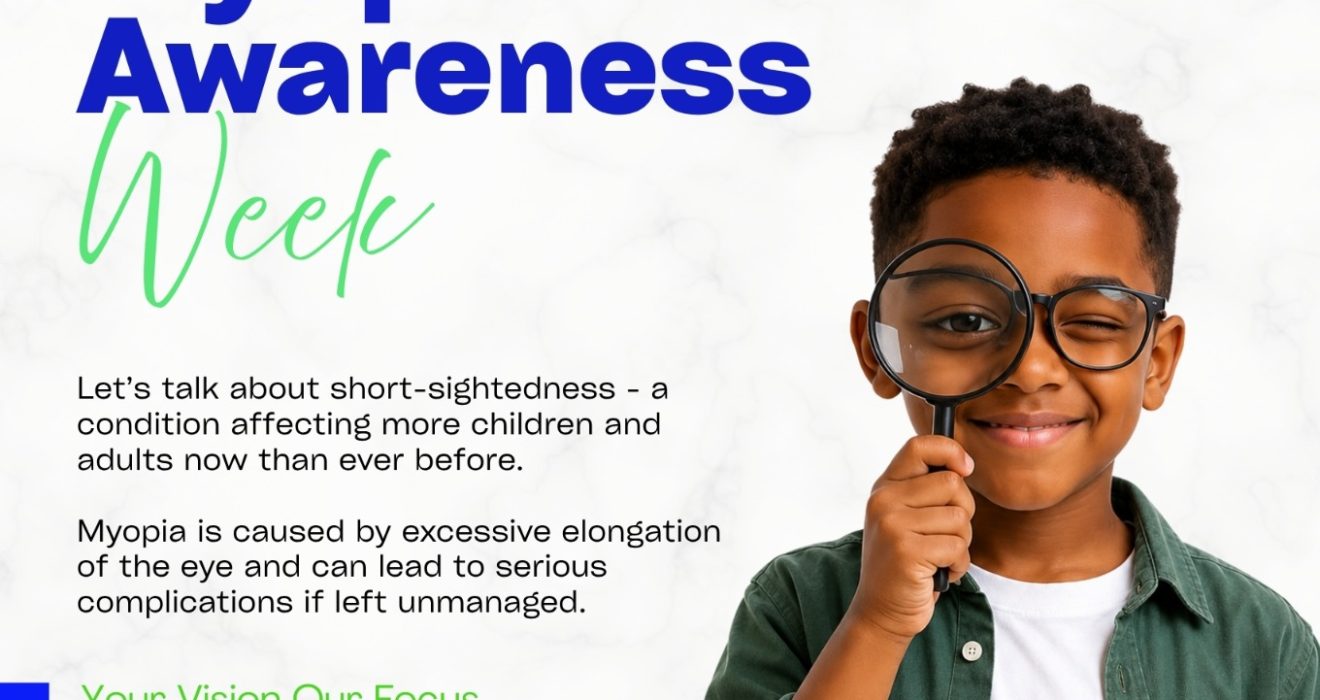
MYOPIA AWARENESS
Understanding the Growing Global Eye Health Concern
By Cypress Eye Centre.
Myopia, commonly known as short-sightedness or near-sightedness, is becoming one of the fastest-growing vision problems globally. It affects millions of children, teenagers, and adults, making distant objects appear blurry while near objects remain clear. What was once considered a simple need for glasses is now recognized as a major public health concern because of its increasing prevalence and potential to cause serious eye complications later in life. As eye care professionals, raising awareness about myopia is essential because early detection, proper management, and healthy lifestyle habits can significantly reduce its progression and long-term impact.
Myopia occurs when the eye grows too long from front to back or when the cornea is too curved. This causes light entering the eye to focus in front of the retina instead of directly on it. As a result, people with myopia can see nearby objects clearly while distant objects appear blurry. Individuals with myopia may struggle to read classroom boards, recognize faces from afar, drive clearly, watch television comfortably, or see road signs properly.
Many people, especially children, may not realize they have myopia until it begins affecting their daily activities. Common signs and symptoms include blurry distance vision, frequent squinting, sitting too close to the television, holding books very close, headaches, eye strain, reduced concentration in school, poor academic performance, excessive blinking, and difficulty seeing at night. Parents and teachers should pay close attention to these warning signs, as children often cannot explain that they are having vision problems.
Globally, myopia is increasing at an alarming rate. Experts predict that by the year 2050, nearly half of the world’s population may become myopic. Several factors are contributing to this rise, including increased screen time, reduced outdoor activities, excessive near work, digital device dependence, and changing urban lifestyles. Children today spend more time indoors using smartphones, tablets, computers, and video games while spending less time outdoors, which research has strongly linked to increasing rates of myopia.
Many people believe myopia is only corrected with glasses, but high myopia can lead to serious eye diseases that may permanently threaten vision. Severe myopia increases the risk of retinal detachment, glaucoma, cataracts, myopic macular degeneration, and even permanent vision loss. This is why myopia should never be ignored. Early diagnosis and proper management are critical for protecting long-term eye health.
Several factors increase the likelihood of developing myopia. Genetics plays an important role, as children with one or both parents who are myopic are more likely to develop the condition. Excessive near work, such as prolonged reading or extended use of digital screens without breaks, increases visual stress on the eyes. Limited outdoor exposure has also been associated with higher rates of myopia because natural outdoor light appears to help slow its development in children. Poor visual habits, including improper reading distance and poor lighting conditions, may further contribute to eye strain and progression.
Childhood myopia deserves special attention because the condition often progresses rapidly during growing years. Undetected myopia can negatively affect a child’s learning ability, classroom participation, confidence, sports performance, and social interaction. Unfortunately, some children may be wrongly labeled as distracted, slow learners, or uninterested in school when the real issue is poor vision. Routine pediatric eye examinations are therefore extremely important for early detection and intervention.
Modern lifestyles have significantly increased screen exposure among both children and adults. Prolonged use of digital devices can increase eye strain, reduce blinking, cause dry eyes, encourage prolonged near focusing, and contribute to worsening myopia. Eye care professionals recommend limiting unnecessary screen time, taking regular visual breaks, and maintaining proper viewing distances. One helpful recommendation is the 20-20-20 rule: every 20 minutes, look at something 20 feet away for at least 20 seconds to help relax the eyes.
Although myopia may not always be completely preventable, certain healthy habits can reduce the risk and slow its progression. Children should spend more time outdoors daily, while excessive screen time should be monitored and controlled. Maintaining proper reading habits, such as using good lighting, sitting with proper posture, and keeping an appropriate reading distance, can also support healthy vision. Most importantly, regular comprehensive eye examinations allow for early detection and timely intervention.
Modern eye care has advanced beyond ordinary glasses alone. Today, several evidence-based methods are available to help control myopia progression. These include prescription glasses, specialized contact lenses designed for myopia control, orthokeratology lenses worn overnight to temporarily reshape the cornea, low-dose atropine eye drops in selected cases, and lifestyle modifications such as increased outdoor exposure and reduced visual stress. An eye care professional can recommend the most suitable management approach based on the patient’s age, lifestyle, and level of myopia.
Routine eye examinations remain one of the most important tools in combating myopia and preserving long-term vision. Many eye conditions, including progressive myopia, can worsen silently without obvious symptoms. Regular eye checks help detect problems early, monitor progression, prevent complications, and improve academic, professional, and overall quality of life. Children should undergo regular eye examinations during their school years, while adults should avoid self-diagnosing or purchasing glasses without professional evaluation.
Myopia awareness campaigns are increasingly important in schools, workplaces, and communities. Public education helps people recognize early symptoms, adopt healthy screen habits, understand the importance of routine eye checks, and seek professional care promptly. Parents, teachers, healthcare providers, and community leaders all have important roles to play in protecting vision and reducing the growing burden of myopia.
In conclusion, myopia is no longer just a minor vision inconvenience but a growing global eye health challenge that requires urgent attention. With increasing digital exposure and changing lifestyles, more individuals especially children are at risk of developing progressive myopia. Fortunately, early detection, proper eye care, healthy visual habits, and timely intervention can help protect vision and reduce long-term complications. Clear vision is essential for learning, productivity, confidence, and overall quality of life. No one should ignore blurry distance vision or frequent visual complaints. Prioritizing regular comprehensive eye examinations today can help preserve healthy vision for the future.
“See Clearly Today, Protect Your Vision Tomorrow.”