SEEING HER CLEARLY: WHY APRIL’S WOMEN’S EYE HEALTH AWARENESS MONTH IS A CALL TO ACTION
April marks Women’s Eye Health Awareness Month, a global initiative dedicated to raising awareness about the unique eye health challenges women face and the importance of early detection, prevention, and treatment of vision problems. It is a reminder that eye health goes beyond clear vision; it is essential to quality of life, independence, and overall wellbeing.
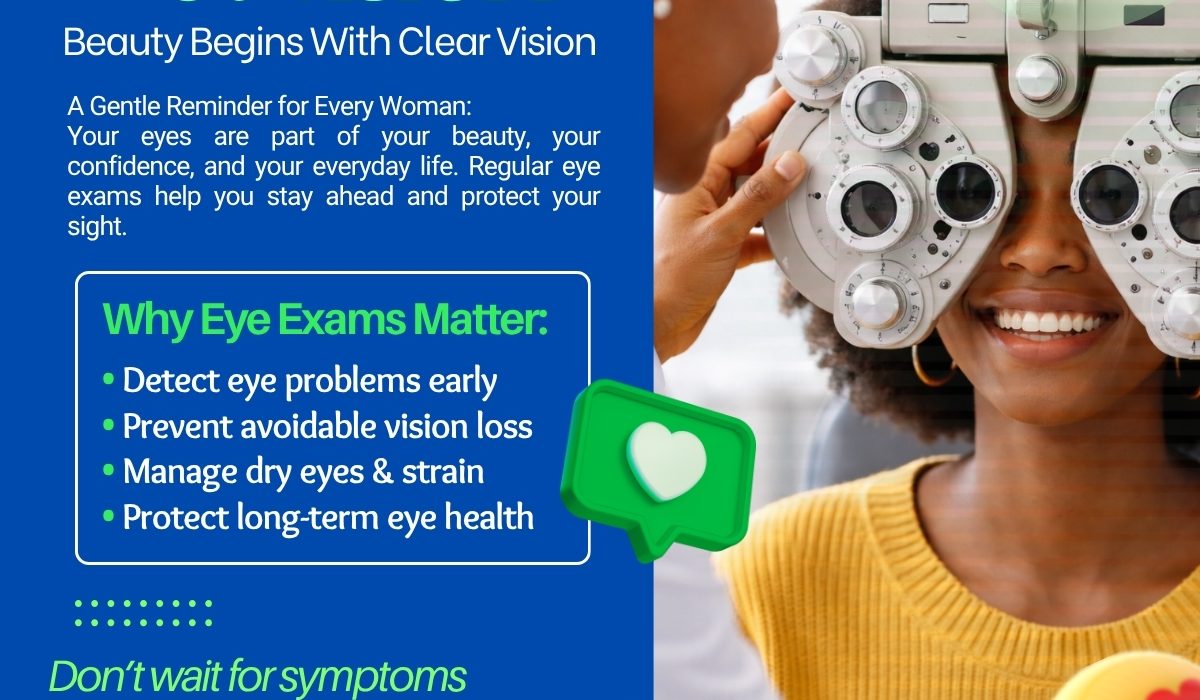
Women are more likely than men to experience vision impairment, yet many still delay routine eye examinations due to busy schedules, caregiving roles, or prioritizing others above themselves. This delay often increases the risk of preventable eye conditions progressing silently.
Women are particularly at risk of conditions such as dry eye syndrome, cataracts, glaucoma, and age-related macular degeneration (AMD). Hormonal changes during pregnancy, menstruation, and menopause can also affect eye comfort and visual stability, making regular eye care even more important.
According to the World Health Organization, over 2.2 billion people globally live with vision impairment or blindness, and many of these cases are preventable or treatable if detected early. This highlights the importance of routine comprehensive eye examinations.
Warning signs such as blurred vision, frequent headaches, eye dryness or irritation, difficulty focusing (especially during screen use), light sensitivity, and sudden vision changes should never be ignored. Many eye conditions develop gradually without pain, making regular check-ups essential.
In today’s digital world, prolonged screen exposure has made digital eye strain increasingly common. Women, who often balance multiple responsibilities, are especially affected. A simple preventive habit is the 20-20-20 rule: every 20 minutes, look at something 20 feet away for 20 seconds to reduce eye fatigue.
Preventive care remains the most effective way to protect vision. This includes annual eye examinations, wearing prescribed glasses or contact lenses, using UV-protected sunglasses, staying hydrated, eating a balanced diet rich in vitamins A, C, and E, and managing conditions such as diabetes and hypertension.
Good vision supports confidence, productivity, safety, and independence. When vision is affected, every aspect of life is impacted.
This April, let us move from awareness to action. Encourage the women around you mothers, sisters, colleagues, and friends to prioritize their eye health and schedule regular eye examinations. Early detection can prevent vision loss.
Because when a woman sees clearly, she lives fully.